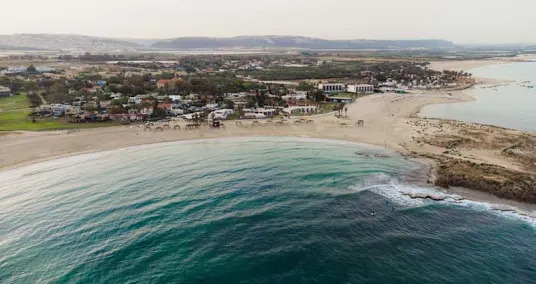
The discovery was made in an ancient shipwreck in the Dor Lagoon near the Carmel Coast, where archaeologists recovered nine pieces of unprocessed iron known as “blooms.”
Researchers from the University of Haifa said Wednesday that an underwater excavation off Israel’s northern Mediterranean coast uncovered what they described as the earliest known cargo of raw iron transported by ship, dating back around 2,600 years, Xinhua reported.
The discovery was made in an ancient shipwreck in the Dor Lagoon near the Carmel Coast, where archaeologists recovered nine pieces of unprocessed iron known as “blooms.” According to the university, the find provides direct evidence of how iron was transported in its earliest commercial stages.
The material was preserved in its original form, having solidified directly in a smelting furnace without undergoing forging or further refinement. Researchers said this distinguishes the cargo from later iron artifacts that typically show signs of shaping or tool-making.
Unlike copper and bronze, which could be melted into liquid form in ancient production processes, iron was heated with charcoal to produce a solid, porous mass. That mass was generally hammered to remove impurities and create denser material suitable for tools and implements.
The recovered blooms showed no indication of that secondary processing stage, suggesting they were transported immediately after production.

Earliest iron shipment discovered in ancient Mediterranean wreck
To determine the age and condition of the cargo, researchers conducted microscopic and chemical analyses.
Radiocarbon dating was also carried out on charred wood embedded in one of the pieces, helping confirm the timeline of the shipment. The findings were published in the journal Heritage Science.
Researchers said the cargo indicates that iron was being moved in raw form from production sites to other locations for further processing, pointing to a level of specialization in ancient manufacturing and trade networks in the Mediterranean.
The University of Haifa said the discovery provides new insight into early iron production and distribution practices in the region.
LATEST POSTS
- 1
 Exploring Programming Greatness: A Survey of \Easy to use Connection points\
 - 2Nodding off is dangerous. Some animals have evolved extreme ways to sleep in precarious environments
- 3A Manual for Well known Western television Series
- 4Well known SUVs With Low Energy Utilization In 2024
- 5\Step by step instructions to Pick the Best Material Organization for Your Home\


- The Best Computer games Ever
- Israeli tourist data from 2025 misrepresented as mass exodus to Thailand
- Roche breast cancer pill cuts risk of disease recurrence by 30% in trial
- Quandoo to shut restaurant booking platform by end of 2026
- This Week In Space podcast: Episode 203 — China Rising
- Israel reports second missile fire from Yemen since start of Iran war
- Mobility exercises are an important part of fitness as we age. Here are some tips
- 'Supergirl' drops 1st teaser trailer: Watch Milly Alcock as Kara Zor-El and the return of Krypto the Superdog
- Two more UN peacekeepers killed in southern Lebanon: UNIFIL